
數法中心管理員
NTU–Waseda–Cornell Workshop on Interdisciplinary Studies of Law Successfully Concludes
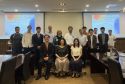
On August 4, 2025, the “NTU–Waseda–Cornell Workshop on Interdisciplinary Studies of Law” was held at the First Conference Room (Room 1710), Tsai Lecture Hall, College of Law, National Taiwan University (NTU). This year marked the first time NTU, Waseda University, and Cornell University jointly organized such an academic exchange. The workshop was designed as a two-part event: the first segment took place on July 30-31 at Waseda University, featuring presentations by Cornell and Waseda faculty with commentary from NTU scholars. The second segment, hosted at NTU on August 4, reversed the roles—Cornell and NTU professors delivered presentations while Waseda faculty provided commentary. The collaboration aimed to foster cross-institutional and interdisciplinary research in law, with topics spanning AI and legal explainability, empirical studies of Taiwan’s citizen judge system, patent exhaustion in the IoT era, and corpus analysis of constitutional texts. The workshop opened at 9:10 a.m. with welcome remarks from Dean Huang-Yu Wang.
Morning Sessions
The first session began at 9:20 a.m., with Professor Sieh-Chuen Huang presenting “What Explainability Means in Law,” exploring how scientific notions of “interpretability” and “transparency” in AI can be translated into normative legal standards. Professor Valerie Hans commented on the psychological factors influencing public trust in machine decision-making, while Professor Takashi Kubota addressed broader questions about the origins of trust in judicial systems.
At 10:30 a.m., Professor Hans delivered the second keynote, offering initial observations on Taiwan’s citizen judge system since its implementation in 2023, and comparing it with jury systems in other countries. Her assessment of Taiwan’s early results was notably positive. Commentators included Professor Keng-Wei Fan, who shared preliminary findings from experimental research commissioned by Taiwan’s Judicial Yuan, and Professor Chung-Chia Huang, who urged caution in interpreting high satisfaction survey results and noted the potential bias introduced by judicial discretion in selecting cases for citizen judge trials.
The third morning session, starting at 11:40 a.m., featured Professor Hao-Yun Chen discussing new challenges to patent exhaustion in the IoT era, comparing the approaches of Taiwan, Japan, and the United States. The discussion with Professor Masabumi Suzuki and Professor Yun-Chien Chang delved into the rationale for extending patent rights to downstream uses of patented goods, drawing parallels with covenants in common law property systems. The morning program concluded at 12:40 p.m., with coffee, tea, fruit, and lunch provided for participants.
Afternoon Sessions
The afternoon program opened at 2:00 p.m. with Professor Dan Awrey’s talk on “Payment Network Governance,” examining the trade-offs between network stability, accessibility, and investment, and their interaction with policy goals such as consumer protection, financial crime prevention, financial inclusion, and systemic stability. Professors Kubota and Professor Chen served as commentators.
At 3:10 p.m., Professor Chung-Chia Huang presented his use of natural language processing (NLP) to analyze the influence and longevity of constitutional texts. Using a dataset of over 500 constitutions and reference points from four core and twelve iconic constitutions, his findings showed the enduring global influence of the U.S. Constitution (1791) and the French Constitution (1848). Commentators Professor Awrey and Professor Huang (Sieh-Chuen) discussed methodological considerations in translation and alternative influence metrics.
The final session at 4:20 p.m. featured Professor Yun-Chien Chang applying complex systems theory to compare trust law in common law and civil law systems. He proposed conceptualizing trust as a “semi-property” to bridge functional gaps in civil law jurisdictions. Professors Suzuki and Professor Yi-Wen Chang commented on parallels with other contractual arrangements trending toward property-like status. The day’s program concluded at around 5:20 p.m.
A Platform for Future Collaboration
The workshop’s intensive schedule and in-depth exchanges fostered robust academic dialogue among faculty and students from all three universities, laying a strong foundation for sustained collaboration in interdisciplinary legal research.
2025 Highlights of the NTU-Hamburg Collaborative Course: Legal Challenges of AI in Healthcare
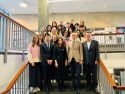
2025 Highlights of the NTU-Hamburg Collaborative Course: Legal Challenges of AI in Healthcare
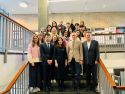
In response to the rapidly evolving landscape of artificial intelligence (AI) and its implications for the legal profession, the College of Law at National Taiwan University (NTU Law) continues to lead international academic engagement through cutting-edge educational initiatives. In 2025, the College once again partnered with the University of Hamburg Faculty of Law to offer the second edition of the "Digitalization of Law" transnational intensive course, with a specialized focus on the legal challenges of AI in healthcare. In an era where AI is transforming every corner of society at unprecedented speed, the intersection of AI and healthcare has become a vital frontier. From diagnostic tools and treatment planning to predictive analytics and patient monitoring, AI is reshaping decision-making processes and operational models in healthcare systems. However, this transformation also brings with it complex legal and ethical challenges, including patient rights, data protection, liability, and regulatory frameworks.
To cultivate legal professionals equipped to navigate this emerging landscape, the 2025 course built upon the first edition’s broad exploration of AI and legal systems, delving deeper into medical applications and encouraging students to actively engage in academic research and comparative legal discussion. The program was structured in two phases: the first held in Taipei (April 7 to 17) and the second in Hamburg (June 10 to 20), with 16 students (eight from each university) participating in lectures, site visits, and joint presentations. The Taipei phase featured joint instruction by faculty from both universities, covering topics such as criminal liability in AI-assisted diagnosis, anonymization and protection of medical data, algorithmic transparency, patient autonomy and informed consent, medical ethics, and legal frameworks for AI-powered medical tools. NTU invited experts in criminal law, privacy law, tech law, and bioethics to guide students through theoretical debates and case studies. Students also visited institutions such as the Ministry of Justice Academy for the Judiciary, the Shilin District Prosecutors Office, and the NTU Cancer Center, gaining a deeper understanding of the intersection between law and medicine. In addition to academic sessions, cultural excursions such as visits to the National Palace Museum and the Jing-Mei White Terror Memorial Park helped students contextualize Taiwan’s legal system, political transition, and healthcare governance in the framework of transitional justice. These experiences offered not only historical and political context but also critical insight into how law is shaped by national identity and past trauma.
The Hamburg phase, co-organized by the University of Hamburg Faculty of Law and the University Medical Center Hamburg-Eppendorf (UKE), expanded the interdisciplinary foundation by incorporating clinical insights and a European legal context. Students explored topics such as medical informatics, AI applications in radiology, and ethical concerns in digital medicine. A highlight of this phase was the visit to UKE’s Martini-Klinik, where students observed a live surgery and engaged in discussions about the real-life integration of AI tools in clinical settings. These direct experiences brought legal theories to life and allowed students to critically examine the legal and ethical responsibilities of healthcare providers in AI-assisted environments. Beyond academic activities, the two-week exchanges in both Taiwan and Germany offered students an immersive experience in different legal cultures and social environments. German students, during their April stay in Taipei, engaged with NTU students and faculty, visited institutions, and participated in cultural activities. They encountered Taiwan’s legal and healthcare frameworks and gained unique perspectives on Taiwan’s democratization process, forensic institutions, and public-private healthcare cooperation. Likewise, NTU students in Hamburg not only attended lectures and institutional visits but also experienced German social values, healthcare systems, and professional norms through daily life interactions. This immersive exchange allowed both Taiwanese and German students to deepen their understanding of each other’s legal and healthcare systems. Through classroom discussions and cultural interaction, they gained valuable insight into how societal values influence legal interpretation and policy-making.
Through these mutual experiences, both groups of students developed a richer appreciation for the historical, cultural, and institutional contexts that shape legal systems. They not only recognized the differences between Taiwan and Germany’s legal cultures but also built common ground through academic dialogue, interpersonal trust, and shared reflection. These exchanges enhanced students’ comparative research capacity, critical thinking, and ability to approach global challenges with empathy and nuance. The final two days of the course were dedicated to student presentations, where mixed teams from both universities presented their findings on key legal issues in AI healthcare. Topics included data protection and anonymization, intellectual property in medical AI innovation, algorithmic bias and systemic risks, informed consent under AI assistance, and legal frameworks for AI-driven healthcare commercialization. These presentations demonstrated strong legal reasoning, academic rigor, and cultural sensitivity, and provided a valuable opportunity for students to synthesize their learning.
As a testament to the program’s effectiveness, one student from the 2024 cohort has already initiated the process of applying for a joint doctoral degree program with the University of Hamburg. This tangible outcome reflects the course’s ability to stimulate academic motivation and foster meaningful cross-border academic engagement. It demonstrates that the program is not only a temporary exchange but a catalyst for long-term academic collaboration and the cultivation of global legal scholars. Through this course, which integrates theory, empirical inquiry, and international collaboration, the College seeks to cultivate future legal professionals capable of understanding complex global issues and contributing meaningfully to legal and technological innovation. By spearheading such initiatives, the College of Law reaffirms its commitment to academic excellence, comparative legal education, and interdisciplinary growth on the global stage. By providing students with first-hand insights, intercultural collaboration, and a deep understanding of legal systems in transition, NTU Law continues to nurture a new generation of legal scholars and practitioners prepared to meet the demands of the AI era.
數位發展與司法未來司法實務研討會
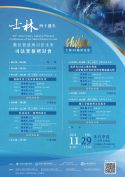
「數位發展與司法未來」司法實務研討會
時間:2024年11月29日(星期五)8:30-17:00
地點:法官學院 2F 國際會議廳
※有興趣參與者,請掃描海報中Qr code完成報名!!
楊岳平 教授

成員簡介
楊岳平教授於2005年自台灣大學法律學系取得法學士後,於2010年取得台灣大學法學碩士,其間並在眾達國際法律事務所執業。2011年獲教育部公費赴美國哈佛大學法學院攻讀法學碩士(LL.M)與法學博士(S.J.D.),於2017年取得哈佛大學法學博士學位。目前研究興趣主要在金融監理與公司治理,包括金融科技、金融機構治理、金融消費者保護、資本市場、國際金融等等。
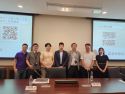
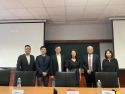
「人工智慧、法律產業和法學教育:大語言模型的挑戰與機會」研討會
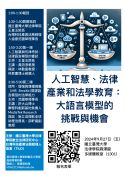
「人工智慧、法律產業和法學教育:大語言模型的挑戰與機會」研討會
時間:2024年9月27日(星期五)下午
地點:國立臺灣大學法律學院霖澤館多媒體教室(1301)
※有興趣參與者,請掃描海報中Qr code完成報名!!
給法律人的AI入門課:人工智慧與機器學習是什麼?如何應用於法學研究?
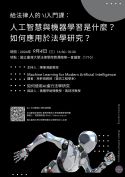
時間:2024年9月4日(三)16:30-18:30
地點:國立臺灣大學法律學院霖澤館第一會議室(1710)
主持人:陳肇鴻副教授(法律學系)
講者:林軒田教授(資訊工程學系)
講題:Machine Learning for Modern Artificial Intelligence
與談人:黃種甲助理教授、黃詩淳教授
臺灣大學 & 漢堡大學跨國共授課程〈人工智慧與法律數位化專題研究〉 NTU-UHH Co-Teaching Seminar "AI & Digitalization of Law"