
數法中心管理員
2026 NTU–Hamburg Collaborative Course: Exploring the Legal Challenges of AI in Medicine
National Taiwan University (NTU) and the University of Hamburg marked the third year of their joint course, “AI and Digitalization of Law,” in 2026. Focusing on artificial intelligence in medicine, the course combined legal scholarship, technical knowledge, and clinical perspectives through intensive teaching in Taipei and Hamburg and several months of collaborative student research.
The course was led by Assistant Professor Patrick Chung-Chia Huang, Professor Sieh-Chuen Huang, and Dean Huang-Yu Wang of NTU College of Law, together with Professor Kai Cornelius of the University of Hamburg Faculty of Law. Eight NTU students and five Hamburg students completed the program, with teaching periods in Taipei from March 17 to 26 and in Hamburg from June 23 to July 2.
Taipei: Connecting Technology, Medical Practice, and Law
The Taipei program introduced students to the technology and medical practices underlying their legal research. Professor Hsuan-Tien Lin of NTU explained machine learning and modern AI, helping participants with legal backgrounds understand how machines learn.
Clinical and industry perspectives brought these concepts into practice. Dr. Joe Chao-Yuan Yeh, founder and CEO of aetherAI, discussed medical AI through examples from medical imaging, digital pathology, and AI-assisted diagnosis. Drawing on experience with healthcare institutions in Taiwan, Germany, and Japan, he illustrated how legal questions arise in product development and clinical workflows. Dr. Tereza Vafková of Masaryk University contributed insights from clinical practice and medical education, examining how physicians and educators use and assess AI.
Legal sessions connected these applications to accountability and patient protection. Professor Sieh-Chuen Huang examined AI explainability and its implications for rights protection, regulatory responsibility, and risk prevention, including issues under the GDPR and the EU AI Act. Assistant Professor Patrick Chung-Chia Huang addressed data protection across the lifecycle of health data, comparing approaches in Taiwan and the European Union.
Visits to the Shilin District Prosecutors Office and units involved in electronic monitoring introduced students to Taiwan’s justice system. Visits to the National Palace Museum and Shilin Night Market also offered opportunities to explore Taipei together. The program concluded with research proposal presentations and reflections, laying the groundwork for continued collaboration before the Hamburg phase.
Hamburg: European Legal Frameworks and Professional Perspectives
The Hamburg program deepened students’ engagement with European legal frameworks through sessions on health data governance, liability for medical AI, and Open Health. A visit to the Martini-Klinik at the University Medical Center Hamburg-Eppendorf (UKE) connected classroom discussions with clinical practice, while a guest lecture by a partner from CMS Hasche Sigle offered a practitioner’s perspective on advising clients about emerging technologies.
On July 1, all participating students attended the international interdisciplinary conference “AI, Medicine and Law” at the Warburg-Haus. Researchers, clinicians, and practitioners discussed medical AI, virtual patients, criminal liability, and intellectual property questions arising from physicians’ use of AI. Further sessions explored computational legal theory, digital sovereignty, data protection, and the development of legal services, giving students broader perspectives on questions closely connected to their research.
Student Research: Comparative Approaches to Medical AI
The course culminated in seven research papers and presentations covering:
-
Informed consent in AI-driven clinical trials
-
Tort liability in medical AI
-
Intellectual property protection for AI-assisted medical innovation
-
Cross-border regulation of AI clinical research
-
Regulatory review of AI-generated medical outputs
-
Protection of vulnerable groups
-
Algorithmic bias
Students used comparative approaches to examine these issues. One project considered how responsibility should be allocated among actors capable of controlling and preventing harm. Another used a shared hypothetical case to compare regulatory responses across jurisdictions, including risk classification, algorithm changes, explainability, and cross-border data flows. Other projects explored inventorship, consent and re-consent, and the relationship between technical sources of algorithmic bias and proposals for legal reform in Taiwan.
Throughout the course, students worked with legal materials in different languages, developed independent arguments, and communicated complex findings in English. Collaboration between the Taipei and Hamburg phases enabled them to revisit their initial questions and refine their analysis before the final presentations.
Strengthening an Ongoing Academic Partnership
Now in its third year, the NTU–Hamburg course continues to develop a shared approach to comparative legal education grounded in research and direct engagement with technology and professional practice. Ms. Hoeyyi Ting played an essential role in coordinating administration and teaching arrangements throughout both phases. She also accompanied the NTU delegation to Hamburg, providing on-site support with students’ studies and daily life abroad. The contributions of the teaching team, guest speakers, administrative staff, and students have strengthened the partnership between the two institutions and supported continued collaboration on the legal challenges of AI in medicine.
活動報導 | 日本勞動紛爭解決程序演講

國立臺灣大學法律學院(以下簡稱「本院」)黃詩淳副院長即將於3月底帶領本院學生前往琉球,與琉球大學法學院師生進行學術交流。於行程展開前,琉球大學人文社會學部戶谷義治教授特此來台,講授日本勞動紛爭解決程序的構造,以使本院師生先行掌握日本勞動法的相關知識。

Prof. Shu-Kai Hsieh

Professor Shu-Kai Hsieh received his Ph.D. in Computational Linguistics from the University of Tübingen, Germany. He previously served as a Postdoctoral Researcher at the Institute of Linguistics, Academia Sinica, and as an Assistant Professor in the Department of English at National Ilan University and National Taiwan Normal University. Supported by the European Union Framework Programme, he was a Visiting Scholar at the Computational Linguistics Laboratory of the University of Pisa, Italy. He is currently a Professor at the Graduate Institute of Linguistics, National Taiwan University.
Research Interests: Corpus and Computational Linguistics; Lexical Semantics and Pragmatics; Writing Systems and Morphology; Language and Cognition. In recent years, he has published more than 80 papers in international conferences and journals. He also serves as the Head Coach of the Taiwan Team for the International Linguistics Olympiad and holds positions on the Asia-Pacific Linguistics Olympiad Committee.
The 4th Asia-Pacific Trusts Law (APTL) Symposium
Overview
The 4th Asia-Pacific Trusts Law (APTL) Symposium was held on December 12–13, 2025, at the College of Law, National Taiwan University. Supported by research funding from the Ministry of Education and the National Science and Technology Council, as well as by the NTU Law Alumni Association, the Symposium was jointly planned by the College of Law, National Taiwan University, the Center for Innovative Enterprise Law, and the Digital Law Center. Continuing the established APTL Symposium series and its comparative and cross-jurisdictional approach, the conference brought together scholars from leading law schools across Asia, Australia, and North America for two days of intensive academic exchange.
Continuing the APTL Symposium series, the conference brought together scholars from the Asia-Pacific region and beyond to engage in sustained comparative and cross-jurisdictional dialogue on the development of trust law in different legal traditions and social contexts. The two-day program consisted of multiple panel sessions chaired by senior scholars, with each session featuring in-depth paper presentations followed by extensive discussion.
Comparative Perspectives on Trust Law
Across the sessions, participants examined the core theoretical foundations and institutional operation of trust law. Key issues included the legal nature of beneficiaries’ rights, the structure of trustees’ powers and duties, asset segregation and third-party effects, and the permissible scope of settlor control. Through comparative analysis of common law and civil law systems, the papers explored how different jurisdictions address similar functional concerns through distinct doctrinal frameworks. Case studies and doctrinal comparisons covered a wide range of jurisdictions, including Japan, Australia, Korea, New Zealand, China, Thailand, Macau, Singapore, India, and Taiwan, highlighting both converging trends and persistent structural tensions.
Regulation, Markets, and Social Functions of Trusts
Several sessions focused on the regulatory dimensions of trust law in contemporary financial and commercial contexts. Discussions addressed real estate investment trusts (REITs) and investment trust regimes in major Asian markets, emphasizing that market performance depends less on formal legal classification than on taxation policy and regulatory design. Other papers examined the implementation of anti-money laundering (AML) standards and beneficial ownership transparency, particularly in response to international norms such as the FATF recommendations, illustrating how regulatory pressure has reshaped trust law frameworks in different jurisdictions.
Beyond financial applications, the Symposium devoted substantial attention to the expanding social functions of trust law. Comparative studies on special needs trusts, elderly care trusts, and charitable trusts demonstrated how trust law has evolved into a key legal mechanism for addressing aging societies, social welfare needs, and family governance challenges across jurisdictions.
Private International Law and Concluding Reflections
In its concluding sessions, the Symposium turned to choice-of-law issues in private international law, examining how different legal systems conceptualize property and obligations in cross-border trust disputes. Participants observed that, given deep structural differences among legal traditions, the pursuit of formal uniformity in choice-of-law rules is often unrealistic. Instead, emphasis should be placed on achieving functional consistency in legal outcomes within existing legal frameworks.
The Symposium concluded with closing remarks reflecting on the value of sustained comparative engagement and international academic collaboration. The discussions throughout the two days underscored the continuing relevance of trust law as a dynamic legal institution shaped by regulatory pressures, social change, and cross-jurisdictional interaction, and reaffirmed the importance of the APTL Symposium as a platform for advancing comparative trust law scholarship.
活動報導 | 2025年第四屆亞太信託法國際研討會
2025年第四屆亞太信託法國際研討會(The 4th Asia-Pacific Trusts Law (APTL) Symposium)於 2025 年 12 月 12 日至 13 日在國立臺灣大學法律學院舉行。本屆研討會係在教育部及國科會、臺大法律學院校友會支持下,由臺大法律學院、企業法制創新研究中心及數位法律研究中心共同規劃,延續 APTL 系列研討會一貫之比較法與跨法域研究取徑,匯聚來自亞洲、澳洲與北美多所頂尖法學院之學者,進行為期兩日的密集學術對話。
本次研討會聚焦信託法於不同法系與社會脈絡中的制度發展與調適,討論主題涵蓋信託法的核心理論與實務議題,包括受託人與受益人之權利結構、資產隔離與第三人效力、委託人控制權的界線,以及信託制度在不同監管體系下的制度設計。多篇論文透過普通法系與大陸法系的比較分析,深入探討日本、澳洲、韓國、紐西蘭、中國、泰國與澳門等法域在信託制度上的異同與制度張力,凸顯信託法在全球法制移植與在地化過程中所面臨的共通挑戰。
除傳統商業與金融信託議題外,研討會亦關注信託法在當代社會中的新角色與功能,包括不動產投資信託(REITs)與投資信託之監管模式、反洗錢與實質受益人透明化要求,以及高齡化社會脈絡下之特殊需要信託、安養信託與慈善信託等議題。相關討論顯示,信託制度已逐步由單一的財產管理與金融工具,轉化為回應社會福利、家族治理與公共利益的重要法律機制。
研討會最後亦就信託相關之國際私法選法問題,以及不同法系對財產與債權概念之差異展開討論,指出在法制多元並存的現實下,與其追求形式上的選法統一,不如致力於在既有架構中促成制度運作結果的一致性。透過本屆研討會之深入交流,與會學者共同展現跨法域比較研究在信託法發展上的理論意義與實務價值,亦為未來持續深化國際學術合作奠定良好基礎。
Research Feature|AI and Legal Scholarship in Taiwan
Our study, “Fine-Tuning LLMs for Legal Knowledge Assessment: A Taiwan Case Study,” was invited by the Legal Design Lab at Stanford Law School to be presented at the AI & Access to Justice Webinar on June 6, 2025. Following the presentation, members of the Lab helped adapt and rewrite the work into an article published on Medium, introducing Taiwan’s experience to the global academic and legal communities.
This research examines how open-source language models can be fine-tuned with locally sourced legal data in the Taiwan context, so that they can better understand and respond to professional legal knowledge—particularly exam-style questions requiring legal reasoning and judgment. Our findings demonstrate that the integration of local legal corpora significantly improves model performance, underscoring the importance of domain- and jurisdiction-specific data for any LLM seeking to operate in the legal domain.
The Taiwan case therefore offers a valuable pathway for the integration of AI and legal education, with broader implications for access to justice and legal innovation.
👉 Read the full Medium article:
https://medium.com/legal-design-and-innovation/fine-tuning-llms-for-legal-knowledge-assessment-a-taiwan-case-study-7cee320fd3d1
研究成果報導|在地法學與AI的結合
本中心之研究 “Fine-Tuning LLMs for Legal Knowledge Assessment: A Taiwan Case Study”,獲史丹佛法學院Legal Design Lab (https://justiceinnovation.law.stanford.edu/projects/ai-access-to-justice/) 邀請,於 2025年6月6日的 AI & Access to Justice Webinar 中進行報告。其後,該實驗室成員將研究內容整理與改寫,並發表於 Medium 平台,向全球學界與實務界介紹臺灣的研究成果與實作經驗。
此研究是在台灣法學語境下,透過本土資料對開源語言模型進行微調(fine-tuning),使模型更準確地理解與回應法律專業知識,尤其是考試型題目的判斷與推理能力。研究顯示,在地化的法律知識加入後,模型的表現有明顯提升,亦凸顯出「跨法域模型若欲進入法律領域,仍需結合本地法律語料」之重要性。台灣法學與AI的結合因此具有相當的國際代表性與應用潛力。
歡迎點選下列連結閱讀完整報導,共同思考 AI 在法律教育與司法實務中的可能方向。
👉 [閱讀 Medium 報導] https://medium.com/legal-design-and-innovation/fine-tuning-llms-for-legal-knowledge-assessment-a-taiwan-case-study-7cee320fd3d1
Workshops on AI and Law in the Age of Legal Analytics
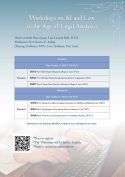
Venue: 1701, Tsai Lecture Hall, NTU
Moderator: Prof. Kevin D. Ashley (Visiting Professor, NTU Law; Professor, Pitt Law)
Session I
Date: 17:30-19:15, October 14, 2025
Panelists:
Prof. Sieh-Chuen Huang 黃詩淳 (College of Law, NTU)
Prof. Shu-Kai Hsieh 謝舒凱 (Graduate Institute of Linguistics, NTU)
Prof. Chung-Chia (Patrick) Huang 黃種甲 (College of Law, NTU)
Session II
Date: 17:30-19:15, October 21, 2025
Panelists:
Prof. Hsuan-Lei Shao 邵軒磊 (Graduate Institute of Health and Biotech Law, TMU)
Prof. Christopher Chao-Hung Chen 陳肇鴻 (College of Law, NTU)
Prof. Chao-Lin Liu 劉昭麟 (Department of Computer Science, NCCU)
Hosted by UAAT-[Strategy II] Office, College of Law, and Digital Law Center.
※ This Workshop will be held in English
※ Inquiry: Email住址會使用灌水程式保護機制。你需要啟動Javascript才能觀看它
Employing LLMs and GenAI to Model Case-based Legal Argument
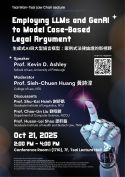
Employing LLMs and GenAI to Model Case-based Legal Argument
(生成式AI與大型語言模型:案例式法律論證的新視野)
Speaker: Prof. Kevin D. Ashley (School of Law, University of Pittsburgh)
Moderator: Prof. Sieh-Chuen Huang 黃詩淳 (College of Law, NTU)
Discussants:
Prof. Shu-Kai Hsieh 謝舒凱 (Graduate Institute of Linguistics, NTU)
Prof. Chao-Lin Liu 劉昭麟 (Department of Computer Science, NCCU)
Prof. Husan-Lei Shao 邵軒磊 (Graduate Institute of Health and Biotech Law, TMU)
Date: October 21, 2025 (Tuesday)
Time: 14:00-16:00
Venue: First Conference Room (1710), Tsai Lecture Hall
College of Law, National Taiwan University
Hosted by UAAT-[Strategy II] Office, College of Law, and Digital Law Center.
※ This public lecture will be held in English
※ Eligible for service learning or graduation hours to both undergraduates and postgraduates.